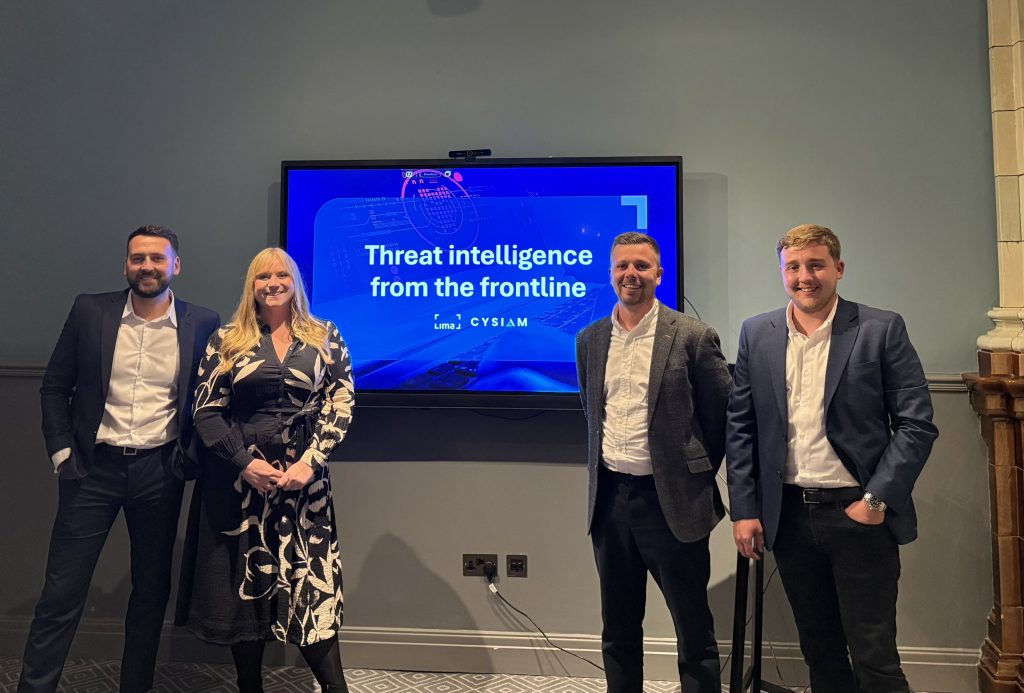
LIMA’s most recent roundtable – Threat Intelligence from the Frontline –
saw security and IT leaders gather at Kimpton Clocktower in Manchester for a fantastic
evening of knowledge sharing and networking as organisations seek to get ahead of emerging cyber threats.
Leading the sessions were LIMA’s Head of Product Ollie Potts and guest speaker, CYSIAM CEO Dave Allan.
Dave has spent his career on the front line of security – from counter-terrorism and cyber capacity building overseas, to founding CYSIAM and this year becoming UK chair of CREST – the industry’s leading accreditation body for security professionals.
Conversations ranged from AI-driven attacks and supply chain vulnerabilities to the economics of
ransomware-as-a-service and how to go about allocating security budget.
Here are the four key takeaways we took from the night.
1. Security belongs to the whole business
Cybersecurity isn’t solely an IT responsibility. Every individual has a role to play in keeping their organisation secure.
Technology and controls are important, but so are the everyday decisions people make, how information is handled, how processes are followed, and having the confidence to question something that doesn’t look right.
Almost everything an organisation does can be traced back to security, which raises a practical question about budget. If security affects the whole organisation, should the budget for security sit separate from the IT budget? Or should each department or individual have a security spend allocated to them?
2. Test your response before you need it
Regular tests, including attack simulations, show how your people and processes respond under pressure and where improvements are needed. Being prepared means having practised.
The exercise works best when it includes people from outside IT, such as operations, finance and leadership, who will all be involved when a real incident happens.
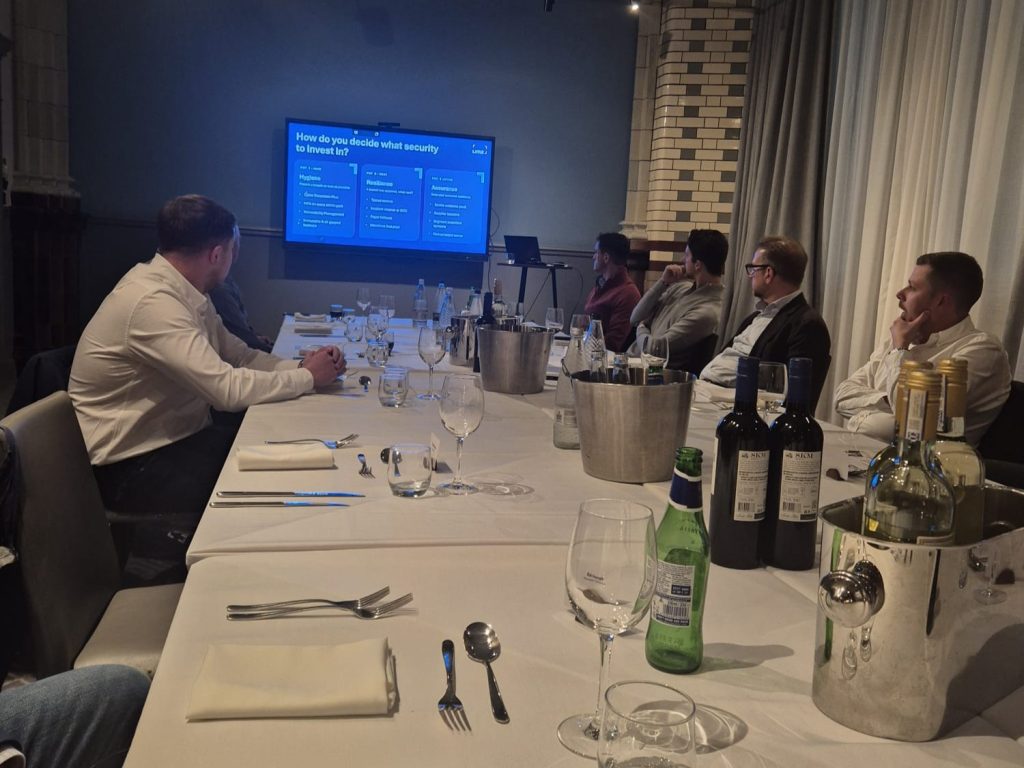
3. Start by protecting your frontline
The right approach depends on your organisation, but monitoring tools, vulnerability management, and telemetry are your first line of defence. For organisations unsure where to begin, they are a good starting point, covering a large share of the risk for a small share of the budget.
Then, as your posture becomes more advanced, you can begin to add in additional layers of security technology and training to the mix.
4. Keep people and systems in balance
Effective security needs both people and technology. Focusing too heavily on one can create gaps elsewhere. Technical controls provide protection, but people still need the awareness and confidence to recognise potential threats. Equally, well-informed people need effective, properly configured systems behind them.
Complimentary Security Consultation
At the event, we offered attendees a complimentary Security Consultation, and we’d like to extend that offer to you today.
The free session helps you to:
· Assess your current security posture
· Prioritise the risks that matter most
· Create a practical roadmap for improvement
· Align investment with business and compliance goals
Find out more about the complimentary Security Consultation: Security Consultation | LIMA
Contact the team at 0345 345 1110 or enquiries@lima.co.uk